Netherlands company and director search
Search the companies and directors registered in the Handelsregister of the Kamer van Koophandel, and read how the Dutch business register works: what it records, what is public and what the law keeps private.
2,821,717 companies and 1,520,598 directors of the Netherlands, from the records of the Handelsregister (Kamer van Koophandel). Newest filing received: 20 November 2026.
Searching by name is free. Documents are paid one at a time; no subscription is necessary.
Netherlands company documents
Search the company, or open a document below and choose the company there. Each document page says what it contains and gives the price and the delivery time before you pay, with pages of a real example where we have one.
- Netherlands Certified Company Filing (Electronic)
Electronic certified copy or certificate of a Dutch company filing from the KVK Trade Register.
Electronic PDF by e-mail, up to 2 business days€59View details
Dato Capital is a private company, not the Handelsregister (Kamer van Koophandel). A certificate or a copy is a document of the register that we obtain for you; a report is compiled by Dato Capital from the register's records.
Netherlands company information at a glance
Businesses and legal persons established in the Netherlands are entered in the Handelsregister (Business Register) kept by the Kamer van Koophandel (Netherlands Chamber of Commerce, KVK), and the KVK gives each a unique number, the KVK number (company numbers).1, 11 The register is open: anyone may inspect the registered data and the documents deposited under the law, with the exceptions the law sets, article 21 of the Handelsregisterwet 2007 (Business Register Act 2007).1
- Public: the name, legal form, seat, number, start date and addresses of the business; the directors and supervisory directors with their dates and powers to represent; the issued and paid-up capital of a BV or NV and its sole shareholder, if it has one; the partners of a general partnership; the deposited deed of incorporation and annual accounts (what is public).1, 2, 3
- Not public: the home addresses of natural persons (shielded since 1 January 2022; a business address that is also a home address stays visible unless it is shielded on request), the shareholders of a BV or NV, which the company itself records, except a sole shareholder and the holders of an NV's shares not fully paid up, and the beneficial owners, whose register has been closed to the general public since 22 November 2022 (shareholders, beneficial owners).2, 3, 13, 22, 23
- Changes: a change of registered data, such as a new director, is reported within one week of the event (filings).1
- Documents: the KVK issues extracts showing the register on the day of the request, certified on paper or digitally; in the European Netherlands the designated district courts issue apostilles for use in another state party to the Hague Apostille Convention (documents and certificates).1, 29, 32, 35
- Status: a company is dissolved by its general meeting, by a court, after bankruptcy, or by a decision of the KVK when it has, for example, no reachable directors and has not filed its accounts for a year; the register keeps the data for ten years after the company ceases to exist (company status).3
The Handelsregister of the Kamer van Koophandel
The Handelsregister is kept by the Kamer van Koophandel, article 3 of the Handelsregisterwet 2007.1 The KVK is a single national body with its own legal personality, seated in Utrecht, article 2 of the Wet op de Kamer van Koophandel (Chamber of Commerce Act).4 The register serves legal certainty in economic life, the supply of general data on businesses to trade, industry and services, the government's records and the registration of beneficial owners to prevent the use of the financial system for money laundering and terrorist financing, article 2 of the Handelsregisterwet 2007.1
It records businesses (ondernemingen), whether they belong to a company, a partnership, an association, a foundation, a natural person or a foreign legal person with a main or secondary establishment in the Netherlands, article 5, and the legal persons with their seat in the Netherlands, among them the naamloze vennootschap, the besloten vennootschap, the coöperatie, the vereniging and the stichting, article 6.1
For each business the register holds its number, trade names, dates of start or end, owner and establishments with their postal and visiting addresses, and the Legal Entity Identifier where one has been issued, articles 9 and 11; for a legal person, its number, name, legal form, statutory seat, dates and any Legal Entity Identifier, article 12. These are authentic data, which government bodies use in their tasks, articles 15 and 30.1
The KVK checks that a filing comes from a person entitled to make it and that it is correct, and it may refuse a filing, for example one that conflicts with the law or with data already held, articles 4 and 5 of the Handelsregisterbesluit 2008 (Business Register Decree 2008).2 A government body that has good reason to doubt an authentic fact in the register must report it, and the KVK then marks the fact as under investigation (in onderzoek) unless it decides on the fact within a set period, articles 16, 32 and 34 of the Handelsregisterwet 2007.1
A fact that must be registered cannot be relied on against a third party who did not know it until it is registered and, for companies, announced, article 25. Filings on an NV or a BV are announced as soon as possible in a publication designated by the minister, or an equally effective instrument that gives access through a central electronic platform, article 24.1
The search on this page covers 2,821,717 companies from the register of the Netherlands. The newest filing held is dated 20 November 2026.
History
The Handelsregisterwet 2007, the law of 22 March 2007, turned the register into a base register (basisregister) of businesses and legal persons, and it repealed the Handelsregisterwet 1996 (Business Register Act 1996), article 56.1 It came into force on 1 July 2008, together with the Handelsregisterbesluit 2008, except for a few articles.6 The Wet op de Kamer van Koophandel, which created the present single Chamber, came into force on 1 January 2014.5
Types of company
Associations, cooperatives, mutual insurance associations, NVs, BVs and foundations have legal personality, article 3 of Book 2 of the Burgerlijk Wetboek (Civil Code).3
Besloten vennootschap met beperkte aansprakelijkheid (B.V.)
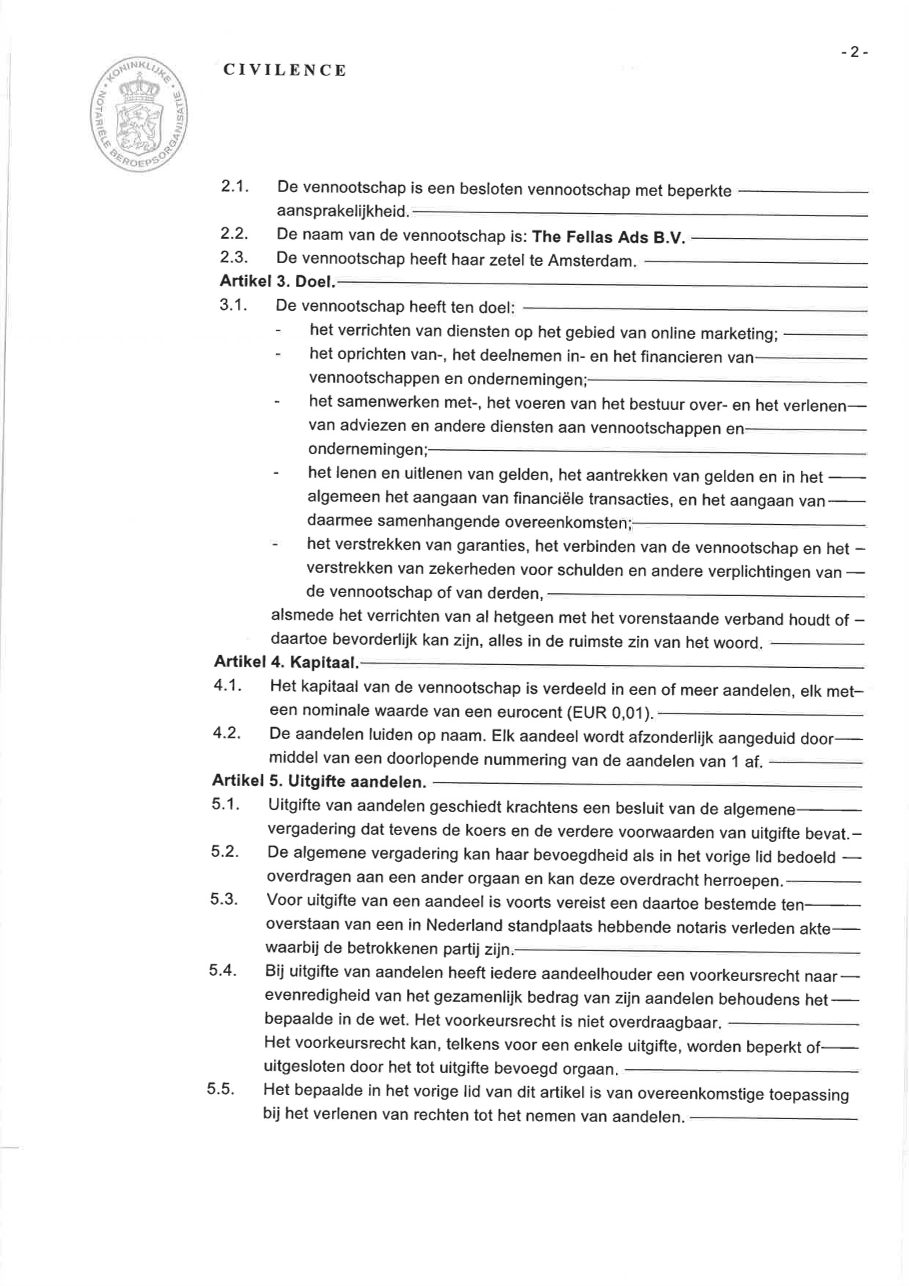
The besloten vennootschap (private limited company) has a capital in one or more transferable registered shares, and a shareholder is not personally liable for what is done in its name, article 2:175 of the Civil Code. One or more persons form it by notarial deed; the name begins or ends with "B.V." or the words in full, articles 2:175 and 2:177.3 The articles state the nominal value of the shares; an authorised capital exists only if the articles provide for one; the amounts may be in a foreign currency, and the law sets no minimum capital, article 2:178.3 These rules come from the Wet vereenvoudiging en flexibilisering bv-recht (the "flex-BV" law), in force since 1 October 2012.9, 33
Since 1 January 2024 nationals of a member state of the European Union can form a BV by electronic notarial deed, and that deed may be in English, articles 2:175a and 2:176.3, 10 The directors register the company and deposit an authentic copy of the deed; until they have filed for its first registration with that copy, they are jointly and severally liable, with the company, for each legal act binding it that is done while they are in office, article 2:180.3
Naamloze vennootschap (N.V.)
The naamloze vennootschap (public limited company) has an authorised capital in transferable shares, its shareholders are not personally liable for what is done in its name, and one or more persons form it by notarial deed, article 2:64. The name begins or ends with "N.V." or the words in full, and the seat must be in the Netherlands, article 2:66. The minimum capital is EUR 45,000, and at least EUR 45,000 of the issued capital must be paid up, article 2:67.3
Coöperatie and onderlinge waarborgmaatschappij
A coöperatie (cooperative) is an association formed by notarial deed to meet material needs of its members through agreements, other than insurance, that it makes with them in its business; an onderlinge waarborgmaatschappij (mutual insurance association) insures its members, article 2:53. If the articles exclude or limit the members' duty to cover a deficit, the name ends in "U.A." (exclusion of liability) or "B.A." (limited liability), and otherwise in "W.A." (statutory liability), article 2:56.3
Vereniging and stichting
A vereniging (association) is a legal person with members and a purpose, and it may not distribute profit among its members, article 2:26. A stichting (foundation) has no members and uses assets set aside for a purpose in its articles; that purpose may not include payments to its founders or to the members of its organs, nor to others unless the payments have an idealistic or social purpose, article 2:285. It is formed by notarial deed and its name contains the word "stichting", article 2:286. The directors register the foundation, with the name and the place of residence, or last place of residence, of each founder, and deposit an authentic copy or extract of the deed; until they have done so, each director is jointly and severally liable, with the foundation, for any legal act by which that director binds it, article 2:289. The directors of an association whose articles are in a notarial deed have the same duty to register it and deposit the deed, and the same liability until they have done so, article 2:29.3
Partnerships: maatschap, vennootschap onder firma, commanditaire vennootschap
A maatschap (partnership) is an agreement by which two or more persons bring something into common use to share the profit, article 1655 of Book 7A of the Civil Code.8 A vennootschap onder firma (general partnership) is a partnership formed to carry on a business under a common name, and each partner is jointly and severally liable for its debts, articles 16 and 18 of the Wetboek van Koophandel (Commercial Code).7 In a commanditaire vennootschap (limited partnership) one or more partners are lenders of money: such a limited partner may not take part in management or have their name used in the firm name, and bears losses only up to their contribution, articles 19 and 20. The partners must register a general partnership, article 23. Until it is registered, it is regarded, as to third parties, as formed for all kinds of business and for an indefinite time, with no partner excluded from acting and signing for the firm, article 29.7
Foreign companies
A foreign company with a business or branch in the Netherlands is registered. For a company of the European Economic Area the register records its directors and supervisory directors and the branch manager; its deed and articles are deposited, and so are its latest accounts, as far as and in the form in which it must publish them in its home state, in Dutch, German, English or French, article 24 of the Handelsregisterbesluit 2008. For a comparable company from elsewhere it also records the governing law and the issued capital, article 25.2
Company numbers
The KVK gives a unique number to each business, each legal person and each establishment, articles 9, 11 and 12 of the Handelsregisterwet 2007.1 The KVK states that the KVK number has eight digits and that a business has only one KVK number, even with several activities or trade names.11 Each establishment (vestiging) has its own establishment number of twelve digits.12
Registered businesses and private-law legal persons must show their register number on letters, orders, invoices, offers and other notices, except advertising, article 27; an association, foundation or other such legal person that runs no business need not. The number to show is the number of the business, article 9, or the number the KVK gives to the activities of a legal person that runs no business, article 13.1
Legal persons and partnerships also receive an RSIN (Rechtspersonen en Samenwerkingsverbanden Informatienummer, legal entities and partnerships information number), which they use to exchange data with government bodies such as the tax administration; sole proprietorships (eenmanszaken) do not receive one, according to the KVK.34 A legal person that is a director of a registered company but is not itself registered can be given a unique number by the KVK, article 35a of the Handelsregisterbesluit 2008.2
What is public
The table describes the information normally obtainable from the Handelsregister. The legal basis gives the law and its article; the year of a law does not show when an item first became public.
Scroll sideways to see all columns.
| Item | Public | Legal basis |
|---|---|---|
| Name, legal form, statutory seat, KVK number, dates of start and end | Yes | Handelsregisterwet 2007 arts 9, 12, 211 |
| Establishments: trade names, postal and visiting address | Yes; a visiting address can be shielded on request in limited cases | Handelsregisterwet 2007 arts 11, 211; Handelsregisterbesluit 2008 art. 512 |
| Telephone number | Recorded but not open to inspection | Handelsregisterbesluit 2008 art. 512 |
| Directors and supervisory directors: name, dates of appointment and leaving, power to represent | Yes | Handelsregisterbesluit 2008 art. 222; Handelsregisterwet 2007 art. 211 |
| Home address of a natural person | No public access; open to government bodies, lawyers, bailiffs, notaries and designated bodies | Handelsregisterbesluit 2008 art. 512 |
| Issued and paid-up capital of a BV or NV | Yes | Handelsregisterbesluit 2008 art. 222 |
| Sole shareholder of a BV or NV | Yes | Handelsregisterbesluit 2008 art. 222 |
| Other shareholders of a BV or NV | Not in the Handelsregister, except the holders of an NV's shares not fully paid up; kept in the company's own register, open at its office to shareholders and holders of certain rights; the entries on shares not fully paid are open to anyone | Civil Code Book 2 arts 85, 1943; Handelsregisterbesluit 2008 art. 222 |
| Partners of a maatschap, general partnership or limited partnership | Yes, except the limited partners, of whom only their number and total contribution are recorded | Handelsregisterwet 2007 art. 101; Handelsregisterbesluit 2008 arts 17, 182 |
| Deed of incorporation and articles | Yes (deposited) | Civil Code Book 2 art. 1803; Handelsregisterwet 2007 art. 211 |
| Annual accounts | Yes, in the form the company's size requires; small non-profit legal persons can be exempt | Civil Code Book 2 arts 394, 395a–3973 |
| Beneficial owners | No public access; by law, access for the authorities, designated public bodies and, for limited data, institutions doing customer due diligence; the KVK authorises them sector by sector | Handelsregisterwet 2007 arts 15a, 22a, 281; KVK access guidance36 |
| Bankruptcy, suspension of payments, debt rescheduling | Yes | Handelsregisterbesluit 2008 art. 392; Faillissementswet art. 1915 |
| Director disqualification | Partly: name, place and country of birth, year of birth, its period and the court decision, while it applies | Handelsregisterbesluit 2008 art. 41a2 |
Anyone may inspect the registered data and deposited documents, article 21 of the Handelsregisterwet 2007, except what the act and the decree made under its article 23 to protect privacy keep private, such as the citizen service number of a sole trader, beneficial-owner documents, home addresses and telephone numbers.1, 2 Data are given to the public by company, not arranged by natural person; lists by person are for designated government bodies, articles 22 and 28.1
The shielding of home addresses widened on 1 January 2022. Before, the decree shielded the private addresses of directors and other officers of companies; since then the KVK shields the home addresses of all natural persons in the register; a business address that is also a home address stays visible.2, 13 The address of the custodian of the books of a dissolved legal person stays open, article 51 of the Handelsregisterbesluit 2008.2
Directors
For an NV or a BV the register records the personal data of every director (bestuurder) and supervisory director (commissaris), the dates on which each took and left office, and whether each may represent the company alone or only jointly with others, article 22 of the Handelsregisterbesluit 2008. It also records the other persons to whom the articles give power to represent the company, with the content of that power, and whether a director is executive or non-executive. Associations, cooperatives and foundations record their directors in the same way, articles 28 and 29. The register may also record the persons holding a power of attorney (gevolmachtigden) of a legal person, with the content of their power, article 14.2
The first directors of a BV are appointed in the deed of incorporation and later ones by the general meeting or, if the articles so provide, by a meeting of holders of a class of shares, and the articles may limit who can be appointed by setting requirements for directors, article 2:242 of the Civil Code.3 A legal person may be a director: its own directors share its liability as director jointly and severally, article 2:11.3
A new or departing director is reported within one week, article 20 of the Handelsregisterwet 2007, with the date on which the change took effect, article 9 of the Handelsregisterbesluit 2008.1, 2 The home address is shielded (what is public).
Disqualified directors
After a bankruptcy the court may, at the request of the trustee or the public prosecutor, disqualify a director in the cases the law lists, for example when a court has held the director liable for mismanagement, when the director deliberately performed, allowed or enabled legal acts that substantially harmed creditors and that a court has annulled by a final judgment, or when the director, despite a request from the trustee, seriously failed in the duty to inform or cooperate with the trustee, article 106a of the Faillissementswet (Bankruptcy Act). For up to five years the person cannot be appointed director or supervisory director of a legal person; an appointment in breach of the ban is void, article 106b. The court registry sends the final decision to the KVK, which removes the director from the register and records the ban for its duration.15 While the ban applies anyone can see the name, place and country of birth, year of birth, the period of the ban and the court decision, article 41a of the Handelsregisterbesluit 2008.2 A disqualification imposed in criminal proceedings, and the court's dismissal of a foundation director, are also registered, article 29 of the Handelsregisterwet 2007.1
Beneficial owners
The register of beneficial owners (UBO-register) is part of the Handelsregister, articles 2 and 15a of the Handelsregisterwet 2007.1 It was introduced by the implementing act on beneficial-owner registration of 24 June 2020 (Implementatiewet registratie uiteindelijk belanghebbenden), in force for the register on 27 September 2020.19, 20 Entities already registered then had 18 months for their first filing, article 57.1
The duty applies to BVs and NVs, except listed companies and their wholly owned subsidiaries, and to European companies and European cooperative societies with their seat in the Netherlands, churches, associations, mutual insurance associations, cooperatives, foundations, partnerships, shipping partnerships (rederijen) and European economic interest groupings, article 10a of the Wet ter voorkoming van witwassen en financieren van terrorisme (Anti-Money Laundering and Anti-Terrorist Financing Act).18 Owners' associations and other private legal persons are left out, article 15a of the Handelsregisterwet 2007.1
For each beneficial owner the register records the citizen service number or a foreign tax number, the name, month and year of birth, state of residence and nationality, the day, place and country of birth and the home address, and the nature and extent of the interest; copies of the documents that prove these data are deposited, article 15a.1 An interest held through shares, voting rights or ownership is shown in classes: more than 25 up to 50 per cent, more than 50 up to 75 per cent, and more than 75 up to 100 per cent, article 35b of the Handelsregisterbesluit 2008.2 When a person who must file does not file what the KVK needs to keep the beneficial-owner data correct and complete, the Minister of Finance can impose an order subject to a penalty (last onder dwangsom), article 47a, or an administrative fine of up to the amount of the fourth category of fines of the Wetboek van Strafrecht (Criminal Code), article 47b of the Handelsregisterwet 2007.1
Who can see it today
On 22 November 2022 the Court of Justice of the European Union declared invalid the provision of the fifth anti-money-laundering directive that required beneficial-ownership information to be accessible in all cases to any member of the general public (joined cases C-37/20 and C-601/20).21 The Dutch register was closed on the same day, and the government stopped giving out its information to analyse the ruling. In April 2023 the government reported that beneficial-owner information had been consulted about 1.4 million times since the register opened on 27 September 2020, and far less often since its closure.22
Until then the law opened part of the data to anyone: the name, month and year of birth, state of residence, nationality and the nature and extent of the interest. The Wijzigingswet beperking toegang UBO-registers (Act restricting access to the beneficial-owner registers) of 14 July 2025 removed that public access from article 21 of the Handelsregisterwet 2007.23 It came into force on 16 July 2025.24
Under article 22a those limited data can now be seen by institutions subject to the anti-money-laundering act, for their customer due diligence, and by the institutions named in the Sanctiewet 1977 (Sanctions Act 1977), for their duties on financial transactions under that act. Persons with a demonstrable legitimate interest connected with preventing or combating money laundering, its predicate offences or terrorist financing may also see them, but only in categories designated by decree, and the KVK tells the beneficial owner when such a request is granted and for what purpose.1 The Handelsregisterbesluit 2008, as in force since 24 October 2026, designates no such category.2
All the data and documents are open to the Financial Intelligence Unit, the competent authorities designated by decree, the supervisors under the Sanctions Act, designated public bodies and certain European bodies, article 28.1 Since 24 October 2026 the designated public bodies include the Nederlandsche Bank, the Autoriteit Financiële Markten (Authority for the Financial Markets), bailiffs and notaries for their statutory tasks, article 51aa of the Handelsregisterbesluit 2008.2, 25 Those who must file see all the data of their own entity, article 22a of the Handelsregisterwet 2007.1 The KVK gives an entity, on request, a copy of the limited data on its own beneficial owners, and it tells a beneficial owner, on request, how many times their data have been supplied, apart from supplies to the Financial Intelligence Unit, the authorities and the other bodies of article 28, article 22.1 A beneficial owner who is under police protection, is under 18, has been placed by a Dutch court under curatele (guardianship) or bewind (administration of property), or has been declared to lack legal capacity abroad can ask for their name, month and year of birth, state of residence and nationality to be shielded, article 51b of the Handelsregisterbesluit 2008.2 The beneficial-owner data and the copies of documents stay open to inspection, for those entitled to see them, until ten years after the entity is removed from the register, article 51c.2
The KVK states that it authorises the organisations entitled to access sector by sector, through its website or an API connection, and that since the second quarter of 2026 institutions subject to the anti-money-laundering act and the institutions under the Sanctions Act can again order extracts online, with eHerkenning, and a UBO API is available. An entity can also order a certified extract of its own beneficial-owner data, which an institution doing customer due diligence can obtain from its client.36
The KVK describes three access levels. At level 1 (UBOB1), for institutions under the anti-money-laundering act such as chartered accountants, lawyers and trust companies, and institutions under the Sanctions Act such as insurers and pension funds, an organisation sees the nature and extent of the interest and, unless they are shielded, the name, month and year of birth, country of residence and nationality. At level 2 (UBOB2), for the institutions named in article 51b(1)(e) of the Handelsregisterbesluit 2008, such as banks, investment firms and electronic money institutions, it sees the same data even when they are shielded. At level 3 (UBOB3), for the Financial Intelligence Unit, the competent authorities and the designated public bodies, it also sees the day, place and country of birth, the home address and the citizen service number or foreign tax number.36, 2 The KVK also states that it may give access only to organisations it can identify objectively, that is, organisations holding a licence from, or registered with, a supervisory authority or a mandatory professional body, so not every organisation carrying out activities under the anti-money-laundering act has access.36
Financial statements
The accounting rules of Title 9 of Book 2 of the Civil Code apply to cooperatives, mutual insurance associations, NVs and BVs and, whatever their legal form, to banks, payment institutions and electronic money institutions. They also apply to a general or limited partnership whose fully liable partners are all foreign capital companies, and to a foundation or association whose businesses reach half the small-company turnover limit two years running, article 2:360.3
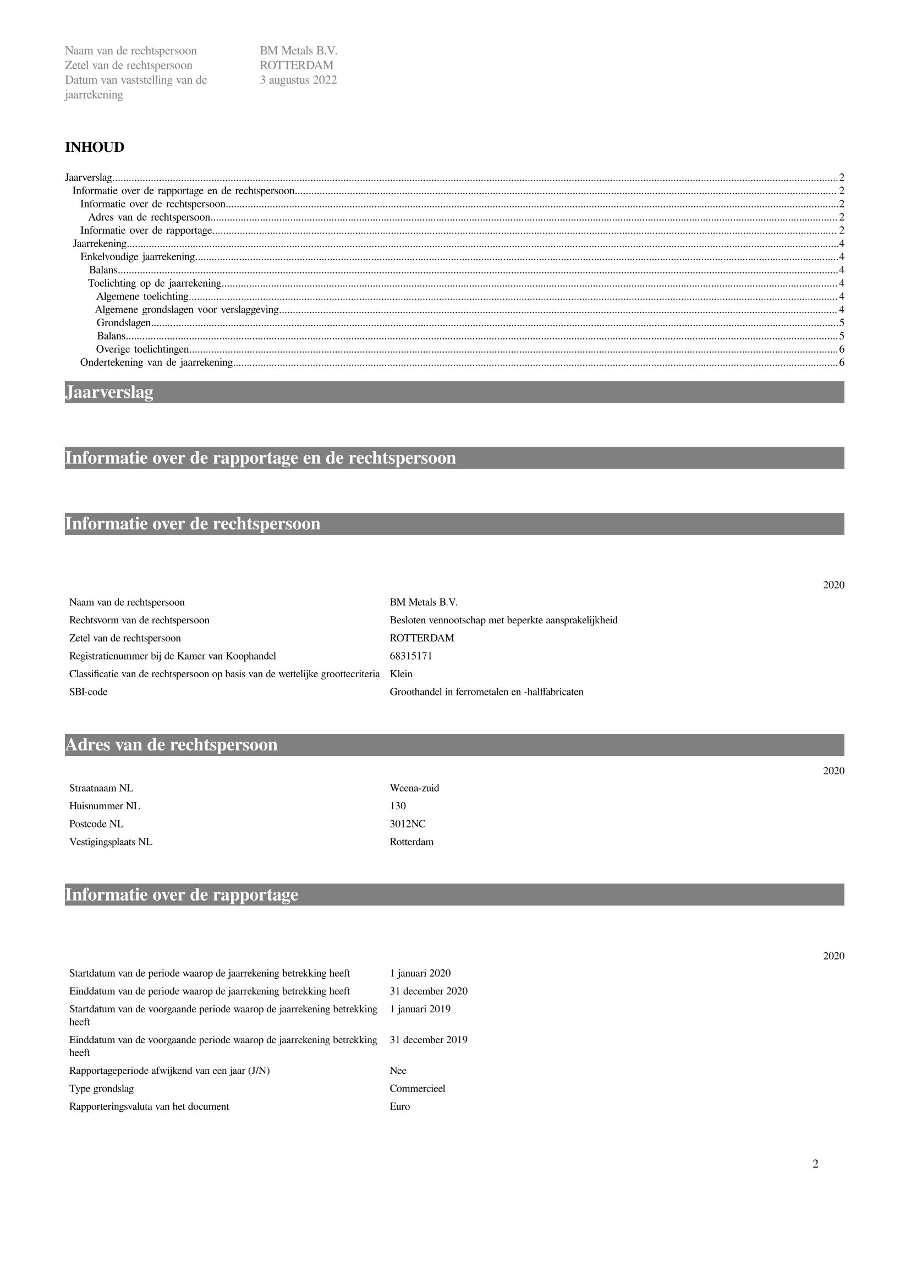
The board prepares the annual accounts within five months of the year end, extendable by the general meeting by up to five months on special grounds (four months, not extendable, for a listed company), and the general meeting adopts them, articles 2:101 and 2:210.3
The company files the accounts at the Handelsregister within eight days after adoption, in Dutch or, if not prepared in Dutch, in French, German or English, and where required electronically under article 19a of the Handelsregisterwet 2007, article 2:394.3, 1 Accounts not adopted within two months after the preparation period are filed unadopted, with a note that they have not yet been adopted, and in any case no later than twelve months after the year end. The register keeps them for seven years.3 A company listed on a regulated market meets the filing duty by sending its accounts to the Autoriteit Financiële Markten, article 2:394.3
Size classes
The size class depends on two of three criteria on two consecutive balance-sheet dates:
Scroll sideways to see all columns.
| Class | Balance-sheet total | Net turnover | Employees | What is filed |
|---|---|---|---|---|
| Micro (art. 2:395a) | Up to EUR 450,000 | Up to EUR 900,000 | Fewer than 10 | A limited balance sheet |
| Small (art. 2:396) | Up to EUR 7.5 million | Up to EUR 15 million | Fewer than 50 | An abridged balance sheet and notes; no audit required |
| Medium (art. 2:397) | Up to EUR 25 million | Up to EUR 50 million | Fewer than 250 | Simplified accounts and the management report |
| Large | More than EUR 25 million | More than EUR 50 million | 250 or more | Full accounts and the management report |
The thresholds come from articles 2:395a, 2:396 and 2:397 of the Civil Code.3 The amounts were raised for inflation, by 25 per cent and, after rounding, by 28.6 per cent for the micro limits, by the decree of 5 March 2024, in force since 13 March 2024; the micro limits were EUR 350,000 and EUR 700,000 before. The new amounts apply to financial years that began on or after 1 January 2024, and a company may apply them to financial years that began on or after 1 January 2023.26
A company in the scope of Title 9 has its accounts examined by an auditor, article 2:393; small companies are exempt, article 2:396.3 A small legal person that does not seek profit need not file its accounts if it sends them to its creditors and members on request and files an auditor's statement that it worked within its objects, article 2:396.3
Filings
Filings are made on a form set by the KVK and available free of charge, unless the KVK agrees to another way, article 3 of the Handelsregisterbesluit 2008.2 The duty to file lies with the owner of a business and, for a legal person, with each of its directors, article 18 of the Handelsregisterwet 2007. The filings must keep the registered data correct and complete at all times, article 19, and a change is filed no later than one week after it happens, article 20.1
Scroll sideways to see all columns.
| Filing | What it reports | Time limit | Law |
|---|---|---|---|
| First registration of a legal person | The company, with an authentic copy of the deed of incorporation (BV) | Within one week of the event | Handelsregisterwet 2007 art. 201; Civil Code Book 2 art. 1803 |
| First registration of a business | The business, its trade names and establishments | From one week before to one week after the start | Handelsregisterwet 2007 art. 201 |
| Change of registered data | New or departing directors, powers, addresses, sole shareholder, partners | One week after the event | Handelsregisterwet 2007 art. 201; Handelsregisterbesluit 2008 arts 9, 222 |
| Beneficial owners | Data on each beneficial owner and supporting documents | One week after a change | Handelsregisterwet 2007 arts 15a, 19, 201 |
| Annual accounts | Accounts in the form the size class requires | Eight days after adoption; at the latest twelve months after the year end | Civil Code Book 2 art. 3943 |
| Dissolution | The dissolution, its date and the liquidators | Filed by the liquidator or, if none, the board; after bankruptcy by the trustee; by the KVK or the court registrar when they dissolve it | Civil Code Book 2 art. 193; Handelsregisterbesluit 2008 art. 402 |
| Dissolution without assets | Balance sheet, income statement, the reason no assets are left, overdue accounts | Fourteen days after the dissolution | Civil Code Book 2 art. 19b3 |
| Liquidation account and distribution plan | The surplus and how it is shared | Open for two months | Civil Code Book 2 art. 23b3 |
| End of liquidation | The legal person has ceased to exist | Filed by the liquidator or the bankruptcy trustee when the liquidation ends | Civil Code Book 2 art. 193 |
| Custodian of the books | Name and address of the custodian | Eight days | Civil Code Book 2 art. 243 |
| Insolvency | Bankruptcy, suspension of payments, their end | Filed by the court registrar | Handelsregisterbesluit 2008 arts 6, 392 |
| Foreign company | Directors, branch manager, deed and articles, accounts published at home | At registration and on each change | Handelsregisterbesluit 2008 arts 24–262 |
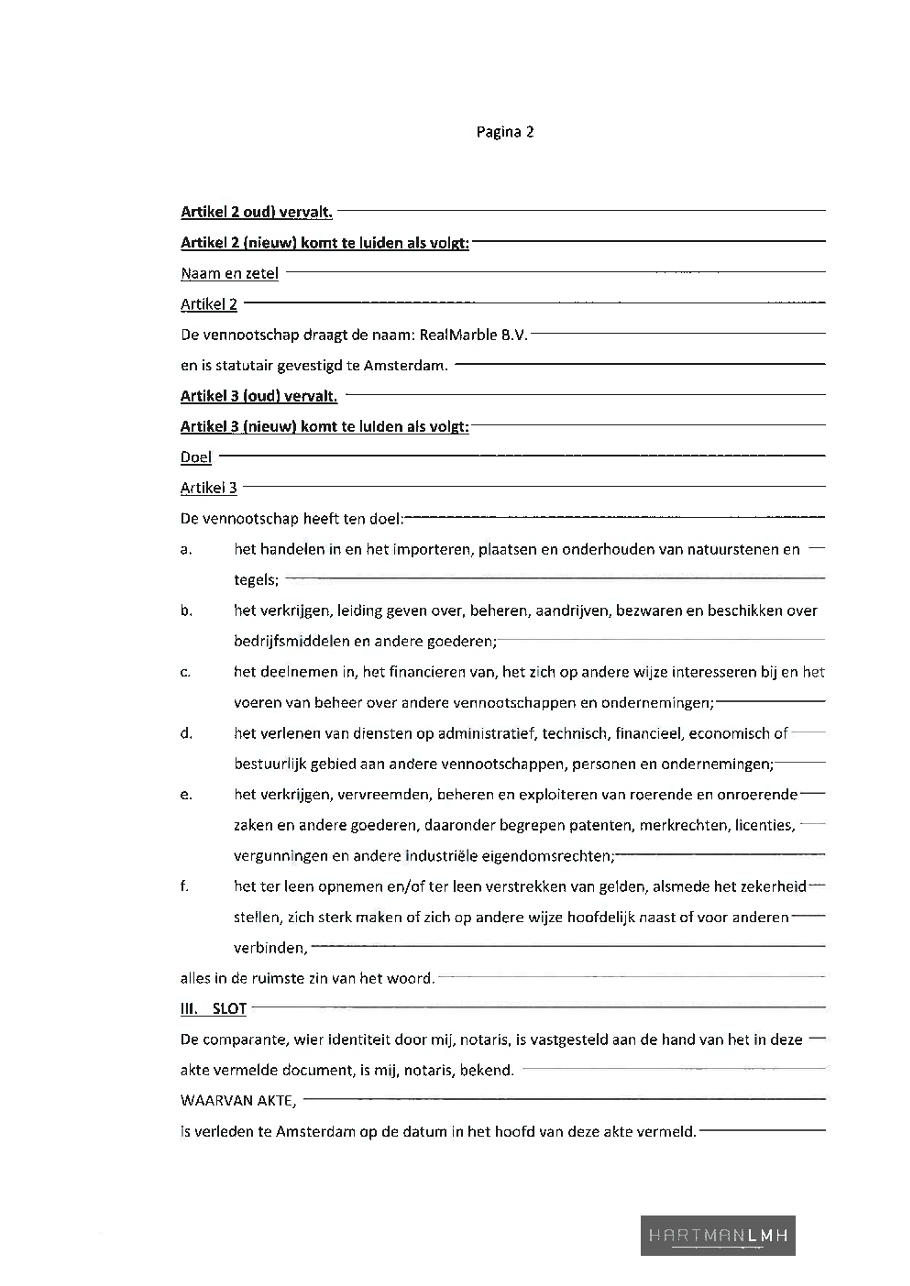
An amendment of the articles of a BV requires a notarial deed, on pain of nullity, article 2:234 of the Civil Code.3
Documents and certificates
The KVK gives, on request and in electronic form if wanted, a copy of or extract from the registered data and deposited documents, article 22 of the Handelsregisterwet 2007. Copies of deposited documents, such as the deed of incorporation and the annual accounts, can be ordered under the same article. A signature held in the register cannot be inspected in electronic form, and the KVK does not supply it in electronic form, articles 21 and 22.1 The KVK describes its Business Register extract (uittreksel Handelsregister) as an official document with the key details of a business, such as its name, address, activities, date of registration and the names of its directors. An extract of a branch lists no officials; they are on the extract of the main establishment.29
A certified extract (gewaarmerkt uittreksel) is issued on paper, with a stamp, or as a PDF file with the KVK's certified electronic seal. According to the KVK, both hold the same information, are official proof of registration and are legally equal. The digital extract stays valid when the file is forwarded electronically, but once printed it is no longer valid for official use. An extract viewed online is not certified and is not an official document.29, 35 According to the KVK, the digitally certified extract is available in Dutch and in English; in the English extract the activities field shows only the activity codes (SBI codes), and a description written by the business owner appears only on the Dutch extract.35
An extract shows the data on the day it is requested. According to the KVK, it is valid for as long as the organisation receiving it accepts it, most organisations ask for one no more than a month old, and not every organisation accepts a digital extract; the organisation asking for it can say which kind it needs and how old it may be.29, 35
The Netherlands signed the Hague Apostille Convention on 30 November 1962 and ratified it on 9 August 1965; it has been in force for the Netherlands since 8 October 1965.30 In the European part of the Kingdom the designated district courts (rechtbanken) are the competent authorities that issue apostilles.32 An apostille certifies the authenticity of the signature, the capacity in which the person signing the document acted and, where appropriate, the identity of the seal or stamp it bears, articles 3 and 5 of the Convention.31
Charges and mortgages
The Handelsregister is not a register of charges. The Handelsregisterwet 2007 and the Handelsregisterbesluit 2008 list what the Handelsregister records, and security over a company's assets is not among those data, articles 9 to 17 of the act.1, 2
A security right over registered property (registergoederen: property whose transfer requires entry in public registers, article 3:10) is a mortgage (hypotheek); over other property it is a pledge (pand), article 3:227 of the Civil Code. A mortgage is created by notarial deed followed by its entry in the public registers kept for registered property, articles 3:10, 3:16 and 3:260.28 A pledge over movable property can be created without handing over the goods, by an authentic or a registered private deed, article 3:237.28 A pledge over shares in a BV is entered in the company's own shareholders register, article 2:194.3
Company status
Dissolution and liquidation
A legal person is dissolved by a resolution of its general meeting (of its board, for a foundation, unless the articles say otherwise), by an event the articles name, after bankruptcy when the bankruptcy is closed for lack of assets or by insolvency, when an association or cooperative has no members left, by a decision of the KVK, or by a court, article 2:19 of the Civil Code.3
After dissolution the legal person continues only as far as needed to liquidate its assets, and its documents and announcements add the words "in liquidatie" (in liquidation) to its name; it ceases to exist when the liquidation ends, or at once if it has no assets, article 2:19.3 The liquidator's account and plan of distribution lie at the register for two months for anyone to inspect, and within that time any creditor or person entitled to the surplus can object to the court, article 2:23b.3 If a creditor or an asset appears later, the court can reopen the liquidation, and the legal person revives for that purpose only, article 2:23c.3
Since 15 November 2023, under the Tijdelijke wet transparantie turboliquidatie (Temporary Act on Transparency in Quick Liquidations), the board of a legal person dissolved by its own resolution and left without assets deposits, within fourteen days, a balance sheet and an income statement, an explanation of why no assets remain and any overdue accounts, and informs the creditors, article 2:19b.3, 27
The books of a dissolved legal person are kept for seven years by a custodian, article 2:24. The register keeps the data of a legal person for ten years after it ceases to exist, article 2:19.3
Dissolution by the KVK
The KVK dissolves a registered NV, BV, cooperative, mutual insurance association, or business-running association or foundation when at least two of these circumstances apply: for at least a year no director is registered, or every registered director has died or cannot be reached; it has failed for at least a year to file its annual accounts; it has ignored for at least a year a reminder to file its corporate income tax return; or it cannot be reached at its registered address, article 2:19a.3
An association or foundation without a registered business is dissolved when it has had no registered or reachable director for a year and cannot be reached at its registered address, article 2:19a.3
The KVK first sends notice of its intention by registered letter to the company and its registered directors and enters it in the register, and it also announces the intention in the Staatscourant (Government Gazette) when, for at least a year, it has had no registered or reachable director and it cannot be reached at its registered address. Eight weeks later it dissolves the company, unless the grounds have gone, and publishes the dissolution in the Staatscourant. An appeal lies to the College van Beroep voor het bedrijfsleven (Trade and Industry Appeals Tribunal), article 2:19a.3
Insolvency
A court declares bankrupt a debtor who has stopped paying, on the debtor's own application or at the request of one or more creditors, or at the request of the public prosecutor for reasons of public interest, article 1 of the Faillissementswet. The trustee publishes an extract of the judgment without delay in the Staatscourant, with the names of the debtor, the judge-commissioner and the trustee and the date of the judgment, article 14. The court registrar enters each bankruptcy in a central public register that anyone can inspect free of charge, article 19.15 The Handelsregister records the bankruptcy, the suspension of payments or the debt rescheduling of a registered owner or legal person, their end and the names of the judge-commissioner and the trustee, article 39 of the Handelsregisterbesluit 2008.2
Legislation
Scroll sideways to see all columns.
| Law | What it governs |
|---|---|
| Handelsregisterwet 20071 | The Handelsregister, its content, access, the beneficial-owner register |
| Handelsregisterbesluit 20082 | The data recorded for each legal form, shielding of addresses, access to beneficial-owner data |
| Civil Code, Book 23 | Legal persons, NV, BV, cooperatives, associations, foundations, annual accounts, dissolution |
| Wetboek van Koophandel, articles 16–347 | General and limited partnerships |
| Civil Code, Book 7A8 | The maatschap |
| Wet op de Kamer van Koophandel4 | The Chamber of Commerce |
| Wet ter voorkoming van witwassen en financieren van terrorisme18 | Who must register beneficial owners |
| Faillissementswet15 | Bankruptcy, the insolvency register, director disqualification |
| Civil Code, Book 328 | Mortgages and pledges |
Timeline
- 22 March 2007: the Handelsregisterwet 2007, replacing the Handelsregisterwet 1996.1
- 1 July 2008: the Handelsregisterwet 2007 and the Handelsregisterbesluit 2008 come into force.6
- 1 October 2012: the flex-BV law; no minimum capital for a BV.9, 33, 3
- 1 January 2014: one national Kamer van Koophandel under the Wet op de Kamer van Koophandel.5
- 1 July 2019: the Wet omzetting aandelen aan toonder; bearer shares of an NV not deposited become registered shares by law on 1 January 2020.17, 3
- 27 September 2020: the register of beneficial owners opens.20
- 1 January 2022: the home addresses of natural persons in the register are shielded by default.2, 13
- 22 November 2022: judgment of the Court of Justice in cases C-37/20 and C-601/20; the Dutch beneficial-owner register closes to the public.21, 22
- 15 December 2022: a visiting address can be shielded on request.2, 14
- 15 November 2023: the Tijdelijke wet transparantie turboliquidatie.27
- 1 January 2024: a BV can be formed by electronic notarial deed.10, 3
- 13 March 2024: higher size thresholds for annual accounts, from financial year 2024.26
- 16 July 2025: the Wijzigingswet beperking toegang UBO-registers ends public access to beneficial-owner data in law.23, 24
- 24 October 2026: designated public bodies, among them notaries and bailiffs, gain access to beneficial-owner data.25
Questions
Who keeps the company register in the Netherlands?
The Kamer van Koophandel (Netherlands Chamber of Commerce, KVK) keeps the Handelsregister under article 3 of the Handelsregisterwet 2007. It registers businesses and legal persons, including BVs, NVs, cooperatives, associations, foundations and partnerships.
Is the Dutch business register public?
Yes. Under article 21 of the Dutch Handelsregisterwet 2007 anyone may inspect the data in the KVK Handelsregister and the documents deposited there, such as articles and annual accounts. Home addresses of natural persons (except a business address that is also a home address and the address of the custodian of a dissolved company's books), telephone numbers and beneficial-owner data are not open to the public.
What is a KVK number?
The KVK number is the unique number the Netherlands Chamber of Commerce (Kamer van Koophandel) gives a business or legal person in the Handelsregister. The KVK states that it has eight digits and that a business has one KVK number; each establishment also has a twelve-digit establishment number. The number of a business or company must appear on letters and invoices, article 27 of the Handelsregisterwet 2007.
Can I find the directors of a Dutch company?
Yes. The Dutch Handelsregister of the KVK records every director and supervisory director of a BV or NV, the dates they took and left office and whether they may act alone or jointly, article 22 of the Handelsregisterbesluit 2008. Their home addresses are not public, article 51.
Can I find the shareholders of a Dutch BV?
Only partly. The Dutch KVK Handelsregister shows a sole shareholder of a BV or NV and, for an NV, the holders of shares not fully paid up. Other shareholders are in the company's own shareholders register, kept by the board under article 2:194 of the Civil Code and open to shareholders and holders of certain rights; only the entries on shares not fully paid are open to anyone.
Is the Dutch UBO register public?
No. The Dutch beneficial-owner register in the KVK Handelsregister closed to the public on 22 November 2022, after the ruling of the Court of Justice of the European Union, and the law of 14 July 2025 removed public access from 16 July 2025. By law, authorities and designated public bodies can see all the data and institutions doing customer due diligence limited data; the KVK states that it authorises them sector by sector.
Do Dutch companies file annual accounts?
Yes. In the Netherlands, NVs, BVs, cooperatives and some partnerships, associations and foundations file their accounts at the KVK Handelsregister within eight days of adoption and no later than twelve months after the year end, article 2:394 of the Civil Code. Micro and small companies file shortened accounts.
Does a Dutch BV need a minimum capital?
No. In the Netherlands, since the flex-BV law came into force on 1 October 2012, article 2:178 of the Civil Code sets no minimum capital for a BV. An NV must have a capital of at least EUR 45,000, article 2:67.
Can the KVK dissolve a company?
Yes. Under article 2:19a of the Dutch Civil Code the Kamer van Koophandel dissolves a company when two of four circumstances apply, such as no reachable directors and annual accounts more than a year overdue. It gives eight weeks' notice and publishes the dissolution in the Staatscourant.
Who issues apostilles on Dutch company documents?
The Netherlands has applied the Hague Apostille Convention since 8 October 1965, and in the European Netherlands the designated district courts (rechtbanken) are the competent authorities that issue apostilles. The apostille certifies the authenticity of the signature, the capacity in which the signer acted and, where appropriate, the identity of the seal or stamp, articles 3 and 5 of the Convention.31
Sources
- Handelsregisterwet 2007 (Wet van 22 maart 2007, Staatsblad 2007, 153), consolidated text in force from 16 July 2025, with its amendment overview, preamble, articles 2–39, 47a–47c, 56, 57. Read on 27 November 2026.
- Handelsregisterbesluit 2008, consolidated text in force from 24 October 2026, with its amendment overview, articles 1–6, 9, 14, 17–29, 35a, 35b, 39–41a, 51–51c. Read on 27 November 2026.
- Burgerlijk Wetboek Boek 2 (Civil Code, Book 2), consolidated text in force from 1 July 2026, with its amendment overview, articles 3, 11, 19–24, 26, 29, 53, 56, 64, 66, 67, 82, 85, 101, 175–180, 194, 196, 210, 234, 242, 285, 286, 289, 360, 393–397. Read on 27 November 2026.
- Wet op de Kamer van Koophandel, consolidated text in force from 1 July 2021, article 2. Read on 17 November 2026.
- Besluit van 25 november 2013 on the entry into force of the Wet op de Kamer van Koophandel (Staatsblad 2013, 508). Read on 17 November 2026.
- Besluit van 18 juni 2008 on the entry into force of the Handelsregisterwet 2007 and the Handelsregisterbesluit 2008 (Staatsblad 2008, 242), articles 1 and 2. Read on 27 November 2026.
- Wetboek van Koophandel (Commercial Code), consolidated text in force from 1 July 2025, articles 16, 18–20, 23, 29. Read on 27 November 2026.
- Burgerlijk Wetboek Boek 7A (Civil Code, Book 7A), consolidated text in force from 1 July 2025, article 1655. Read on 17 November 2026.
- Besluit van 29 juni 2012 on the entry into force of the Wet vereenvoudiging en flexibilisering bv-recht (Staatsblad 2012, 301). Read on 17 November 2026.
- Wet van 28 juni 2023 implementing Directive (EU) 2019/1151 on digital tools in company law (Staatsblad 2023, 277). Read on 17 November 2026.
- Kamer van Koophandel, guidance page "KVK number: all you need to know", edited 18 September 2026. Read on 18 November 2026.
- Kamer van Koophandel, guidance page "Establishment number", edited 7 July 2026. Read on 18 November 2026.
- Besluit van 14 oktober 2021 amending the Handelsregisterbesluit 2008 to shield home addresses by default (Staatsblad 2021, 519), article I and explanatory note, section 2. Read on 17 November 2026.
- Besluit van 24 november 2022 amending the Handelsregisterbesluit 2008 on shielding visiting addresses on request (Staatsblad 2022, 475), article I. Read on 17 November 2026.
- Faillissementswet (Bankruptcy Act), consolidated text in force from 1 September 2026, articles 1, 14, 19, 106a, 106b. Read on 27 November 2026.
- Wet omzetting aandelen aan toonder (Wet van 13 februari 2019, Staatsblad 2019, 107), article I. Read on 17 November 2026.
- Besluit van 5 april 2019 on the entry into force of the Wet omzetting aandelen aan toonder (Staatsblad 2019, 149). Read on 17 November 2026.
- Wet ter voorkoming van witwassen en financieren van terrorisme, consolidated text in force from 1 July 2026, article 10a. Read on 27 November 2026.
- Implementatiewet registratie uiteindelijk belanghebbenden van vennootschappen en andere juridische entiteiten (Wet van 24 juni 2020, Staatsblad 2020, 231). Read on 17 November 2026.
- Besluit van 3 juli 2020 on the entry into force of the Implementatiewet registratie uiteindelijk belanghebbenden (Staatsblad 2020, 232). Read on 17 November 2026.
- Court of Justice of the European Union (Grand Chamber), judgment of 22 November 2022, joined cases C-37/20 and C-601/20, WM and Sovim, operative part. Read on 17 November 2026.
- Tweede Kamer, Kamerstukken II 2022/23, 31477, nr. 89, government answers on the register of beneficial owners, published 21 April 2023. Read on 27 November 2026.
- Wijzigingswet beperking toegang UBO-registers (Wet van 14 juli 2025, Staatsblad 2025, 189), article I. Read on 17 November 2026.
- Besluit van 14 juli 2025 on the entry into force of the Wijzigingswet beperking toegang UBO-registers (Staatsblad 2025, 190, issued 15 July 2025). Read on 17 November 2026.
- Besluit van 22 september 2026, Wijzigingsbesluit toegang UBO-registers voor bestuursorganen en rechtspersonen met een overheidstaak (Staatsblad 2026, 333), article I. Read on 17 November 2026.
- Besluit van 5 maart 2024, Implementatiebesluit Richtlijn verhoging grensbedragen (Staatsblad 2024, 52), articles 1–4 and explanatory note, section 1. Read on 17 November 2026.
- Besluit van 28 juni 2023 on the entry into force of the Tijdelijke wet transparantie turboliquidatie (Staatsblad 2023, 244). Read on 17 November 2026.
- Burgerlijk Wetboek Boek 3 (Civil Code, Book 3), consolidated text in force from 1 July 2025, articles 10, 16, 227, 237, 260. Read on 17 November 2026.
- Kamer van Koophandel, guidance page "Order a KVK Business Register Extract". Read on 27 November 2026.
- Hague Conference on Private International Law, status table of the Apostille Convention, entry for the Netherlands. Read on 17 November 2026.
- Convention of 5 October 1961 Abolishing the Requirement of Legalisation for Foreign Public Documents, articles 3 and 5. Read on 17 November 2026.
- Hague Conference on Private International Law, Netherlands – Competent Authority (Art. 6). Read on 17 November 2026.
- Wet vereenvoudiging en flexibilisering bv-recht (Wet van 18 juni 2012, Staatsblad 2012, 299), article I. Read on 17 November 2026.
- Kamer van Koophandel, guidance page "RSIN number", edited 7 July 2026. Read on 18 November 2026.
- Kamer van Koophandel, guidance page "Business Register extract - digitally certified". Read on 27 November 2026.
- Kamer van Koophandel, guidance page "Who has access to UBO data?", edited 26 October 2026. Read on 27 November 2026.
New in the register
This guide was reviewed on 27 November 2026 against the laws in its sources list. It is general information and not legal advice. Dato Capital is a private company; it is not the Handelsregister (Kamer van Koophandel) and does not act for it.